
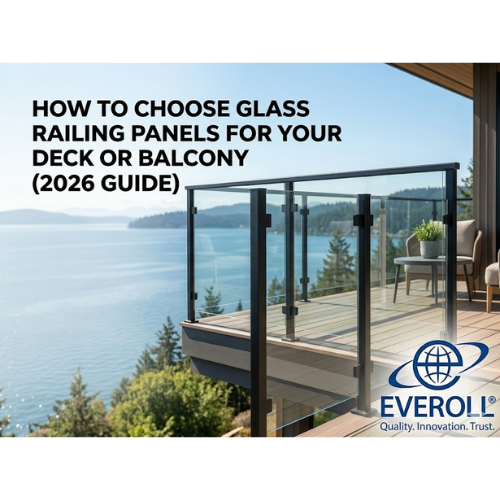
Your deck or balcony railing is one of those things that will be looked at, leaned on, and judged by every visitor for years to come. Get it right and it adds real value to the space ; visually and structurally. Get it wrong and you are looking at failed inspections, unexpected replacement costs, or a railing that simply does not hold up when winters decide to test it.
Picking the right glass panels for railing involves more moving parts than most people expect. Glass type, thickness, hardware grade, framing style, building code requirements — they all need to work together. Get one of those wrong and the others cannot compensate for it.
Glass railings have become the default choice for homeowners and contractors, and honestly, it is not hard to see why. Whether you are installing a glass deck railing or a glass railing for balcony, they do not rot like timber. They do not rust the way untreated metal does. Day-to-day upkeep is minimal. A properly specified glass panel for balcony railing, installed correctly, will hold up through 25 to 30 years of freeze-thaw cycles, hard winters, and everything the climate throws at it.
This guide covers what you actually need to know when selecting glass railing panels for your deck or balcony in the order the decisions tend to come up.
-
Choose the Right Type of Glass
Walk into this without knowing the difference between glass types, and you will either overpay for something you did not need or underbuy and create a compliance problem. There are three types used in railing applications, and they are not interchangeable.

-
Tempered glass:
This is the starting point for any safety-rated installation. The glass goes through a heat treatment process that makes it significantly stronger than standard glass — and when it does eventually break, it fragments into small blunt pieces rather than the kind of sharp shards that cause injury. For most residential deck projects, a tempered glass railing is the minimum acceptable specification. If a supplier is offering you anything less, that is a conversation worth having before you go any further.
-
Laminated glass:
Laminated glass bonds two panes together using a PVB interlayer running between them. What that means in practice: if the panel cracks, it does not fall away. It holds its position. This matters most in overhead applications, high-traffic balcony settings, or anywhere that a panel coming loose would create a serious hazard. It is a more specific specification than tempered and is usually chosen for a clear reason, not as a general upgrade.
-
Tempered-laminated:
This combines both processes and is the most robust option available. If your balcony sits at height, sits near a pool, or is exposed to significant wind loading, this is where the conversation with your supplier should begin. The cost difference is real, but so is the performance gap.
-
Select the Correct Thickness
Thicker glass is stiffer, doesn’t flex or hum under wind pressure, and frankly looks more substantial. It’s one of those details that’s hard to articulate until you’re standing next to a 10mm panel versus a 15mm one.
- 10 mm — Meets the bare minimum in most codes. Fine for sheltered or semi-indoor applications, but not ideal for exposed glass railing for balcony setups.
- 12 mm — The sweet spot for standard residential builds. Widely stocked, competitively priced, and performs well on the majority of deck and balcony projects.
- 15 mm — Step up here if you’re dealing with high wind loads or a commercial-grade specification.
- 19 mm — Reserved for fully frameless systems only. When there’s no surrounding frame taking any structural load, the glass itself carries everything, so you need this.
One thing worth flagging: always verify thickness requirements against your local building code, not just general industry guidance. Most jurisdictions require railing panels to handle a minimum lateral load of 225 lbs per linear foot at the top — your supplier should have engineering documents to back this up.In Ontario, you can use 6 mm glass with a full frame, 10 mm for a post/clamp half-frameless system, and 12 mm for frameless. Always check your local code before purchasing.
-
Choose the Right Framing System
This decision is partly structural and partly aesthetic, but the two are more linked than people expect.
Framed systems run aluminium or stainless steel around all four edges of each panel. They’re the most affordable option and commonly used in entry-level glass panels for deck railing setups. The trade-off is that the visible frame reduces the clean look.
Semi-frameless is the middle ground most residential projects land on — posts at intervals, no rail surrounding the glass itself. Structurally solid, noticeably cleaner, and the price doesn’t jump dramatically from framed. It works well and there’s a reason it’s widely used.
Frameless systems are exactly what they sound like. Glass slots directly into base channels or sits on spigots with nothing interrupting the panel. The result is genuinely impressive when done properly. The catch: it requires 19 mm glass and precise installation. Shortcuts here are costly. If you’re working on a premium build, this is the specification that delivers.
-
Understand the Code Requirements
A railing that doesn’t comply isn’t just a permit problem. On an elevated balcony it’s a liability, and in some cases a genuine safety risk. The core requirements to confirm before you purchase anything:
- Minimum height of 36 inches for decks under 30 inches above grade; 42 inches for anything higher (IBC standard — verify with your local authority)
- Glass must be safety-rated; annealed glass isn’t permitted in railing applications
- Panels must withstand 225 lbs horizontal load at any point at the top rail
- All hardware must be rated for exterior use — marine-grade where applicable
- Balcony installs may need engineer-stamped drawings before a permit is issued
- Pool fence applications carry separate requirements, including self-closing gate hardware
Pull the permit. Book the inspection. A compliant railing takes a little more upfront effort and none of the headache later.
-
Consider the Design Details
Clear vs. tinted glass — Clear glass is the most popular by a wide margin and works with almost every architectural style. Low-iron (ultra-clear) glass removes the faint green tint that standard glass carries, which matters when colour accuracy is important — overlooking a garden, for instance. Frosted or tinted panels trade the open feel for privacy; useful in the right context, limiting in most others.
Top rail material — Brushed stainless steel is the benchmark. It ages well, pairs with virtually anything, and the finish holds in outdoor conditions. Aluminum is a reasonable, cost-effective alternative. In frameless systems, some designs skip the top rail entirely and let the polished glass edge carry the look—when it’s executed well, it’s hard to beat.
Post spacing — In semi-frameless systems, posts typically land four to six feet apart. Wider spacing reduces visual interruption, but before changing standard configurations, confirm the structural implications with your supplier. It’s not always as straightforward as it looks.
Coastal environments — Salt air is harder on hardware than most people expect. Standard stainless steel corrodes faster than you’d think near the ocean. If the project is in a coastal or high-humidity location, 316-grade marine stainless steel for all fasteners, spigots, and fittings is non-negotiable. It costs a bit more and saves a lot.
Why Everoll Industries Is the Right Glass Railing Panel Supplier for Your Project
Everoll Industries Limited has been in the architectural hardware space since 2006 — long enough to have developed a product range that covers pretty much everything a railing project needs under one roof. SGCC-certified tempered glass panels in 34, 40, and 46-inch configurations. Stainless steel spigots, cap rails, posts, clamps, connectors, and pool-rated gate hardware; along with high-quality stainless steel hardware for glass railings, the range is comprehensive. Satin and matte black finish options across the range.
For contractors, the practical upside is straightforward — specifying glass, mounting hardware, and accessories from a single supplier removes the compatibility guesswork that comes with piecing a system together from multiple sources.
For homeowners, it means one catalogue, one conversation, and a supplier that has been doing this long enough to actually know the products. Everoll also carries shower hardware, stair spindles, and aluminium railing components for broader project needs.
Visit our website to explore the full range of products or email us at info@everoll.com to get a quote.
Frequently Asked Questions (FAQs)
1. What type of glass is required for deck and balcony railings?
Tempered glass is the minimum code-compliant specification for residential deck and balcony railings. It is heat-treated to be significantly stronger than standard glass and breaks into small blunt pieces rather than sharp shards. For elevated balconies or high-traffic areas, tempered-laminated glass is the recommended upgrade as it holds its position even when cracked, preventing panel fallout. Annealed glass is not permitted in railing applications under most building codes.
2. What thickness of glass should I use for a balcony railing?
12 mm tempered glass is the standard thickness for most residential deck and balcony railings. It meets code requirements, handles typical wind loads, and is widely available. For exposed or high-wind locations, 15 mm is the safer specification. Fully frameless systems require 19 mm glass because the panel carries all structural load with no surrounding frame. 10 mm meets the bare minimum in most codes and is generally suitable only for sheltered or semi-indoor applications. Everoll Industries supplies SGCC-certified tempered glass panels in 34, 40, and 46-inch configurations to suit standard residential builds.
3. What are the building code requirements for glass railing panels?
Under the International Building Code, glass railing panels must meet a minimum height of 36 inches for decks under 30 inches above grade and 42 inches for anything higher. Panels must be safety-rated tempered or laminated glass and must withstand 225 lbs horizontal load at any point . All exterior hardware must be rated for outdoor use with marine-grade fittings required in coastal environments. Pool fence installations carry additional requirements, including self-closing gate hardware. Always verify with your local authority before purchasing as permits and engineer-stamped drawings may be required for elevated balconies.
4. What is the difference between framed, semi-frameless, and frameless glass railing systems?
Framed systems have aluminium or stainless steel surrounding all four edges of each panel and are the most affordable option. Semi-frameless systems use posts at intervals without a rail surrounding the glass, offering a cleaner look at a moderate price and are the most common choice for residential projects. Frameless systems mount glass directly into base channels or spigots with no framing interrupting the panel, delivering the most premium result but requiring 19 mm glass and precise installation. Everoll Industries supplies hardware for all three system types, including stainless steel spigots, cap rails, posts, and clamps. Visit our website to explore the full product range.
5. What hardware should I use for glass railings in coastal or high-humidity environments?
316-grade marine stainless steel is required for all fasteners, spigots, clamps, and fittings in coastal or high-humidity environments. Standard 304 stainless steel corrodes significantly faster in salt air and is a common and costly mistake in coastal railing installations. Everoll Industries supplies marine-grade stainless steel spigots, posts, cap rails, and connectors specifically rated for these conditions. Email info@everoll.com or visit everoll.com to get a project quote.
6. How long do glass railing panels last on a deck or balcony?
A properly specified and correctly installed glass railing panel will last 25 to 30 years including through freeze-thaw cycles and harsh winters. Glass does not rot like timber and does not rust the way untreated metal does, making it one of the most durable and low-maintenance railing materials available. Longevity depends on using the correct glass type, code-compliant hardware, and marine-grade fittings in coastal locations.
7. Should I choose clear, tinted, or frosted glass for a deck railing?
Clear glass is the most popular choice and works with virtually every architectural style, maximising light and views. Low-iron (ultra-clear) glass removes the faint green tint present in standard glass and is worth considering when color accuracy matters, such as overlooking a garden. Frosted or tinted panels provide privacy but reduce the open feel of the space and are useful in specific contexts but limiting in most. For the majority of residential deck and balcony projects, clear or low-iron glass is the right starting point.
8. Where can I buy glass railing panels and matching hardware from a single supplier?
Everoll Industries Limited has supplied architectural railing hardware since 2006 and offers SGCC-certified tempered glass panels alongside a complete range of matching stainless steel hardware, including spigots, cap rails, posts, clamps, connectors, and pool-rated gate hardware in satin and matte black finishes. Sourcing glass and hardware from a single supplier eliminates compatibility issues between components, which is a common problem when piecing a system together from multiple sources. Everoll also supplies shower hardware, stair spindles, and aluminum railing components for broader project needs. Contact us to get a quote or email us at info@everoll.com.